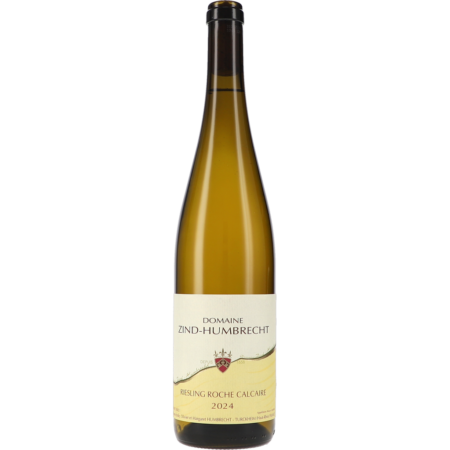
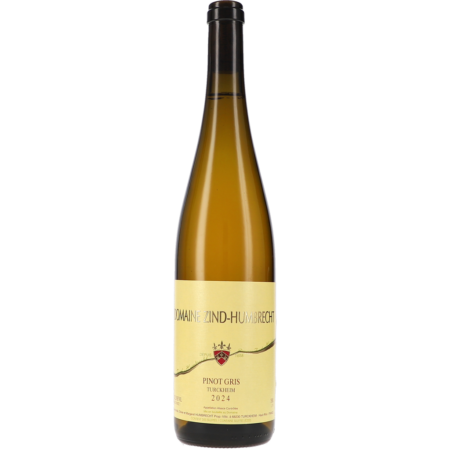
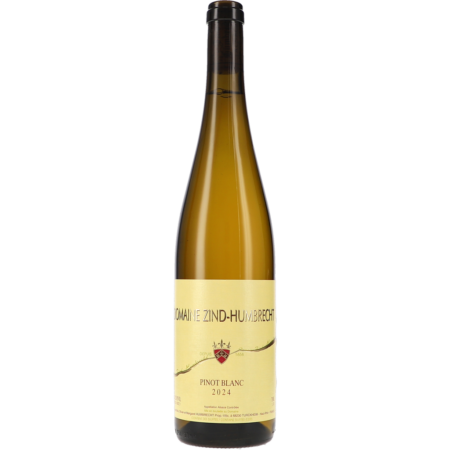
A dry Alsace white wine from Oligocene limestone in Turckheim, combining orange fruit, ginger and chalky minerality with fresh acidity to create a thrilling drinking experience.
Bottler: Domaine Zind Humbrecht, 4 Route de Colmar, 68230 Turckheim / France
In the glass
Colour
Radiant, pale golden yellow with delicate pink reflections.
Nose
An aristocratically cool nose of oranges and orange zest, ginger, mango and apricot above an omnipresent chalky minerality.
Palate
Juicy and fresh, with vibrant acidity, a fine tannin structure and pronounced fruit over a chalky foundation.
Character
An elegant, multi-faceted Pinot Gris with great tension and ageing potential – benefits from a carafe and some time in the cellar.
Pairing
Crustacean soup with herb dumplings, lamb tagine with preserved lemon and nigella seeds, or spaghetti squash fritters with a poached egg.
Notes
From the wind-exposed Heimbourg vineyard, facing south-west to west, on limestone; fermented without commercial yeasts and bottled dry after 18 months on the lees – from the Demeter-certified estate of France's first Master of Wine, Olivier Humbrecht.
Tasting note
Colour & appearance
Radiant, pale golden yellow with delicate pink reflections.
Nose
Aristocratically cool on the attack, carried by a chalky minerality that positively challenges the carafe. Then a lavish bouquet unfolds: orange and orange zest, ginger, mango and apricot. A Pinot Gris with real tension, whose nose already hints at a fresh, multifaceted palate.
Palate
Juicy, with fresh acidity and a fine tannin structure. The pronounced fruit rests on a chalky foundation. Even now it is a serious companion to intense cuisine, yet a little cellar ageing will only reveal its full beauty. Be sure to decant it and enjoy it from large Burgundy glasses.
Terroir & origin
The single vineyard site Heimbourg lies near Turckheim on Secondary and Tertiary fault terrain, where the geology changes markedly over short distances – the reason why the vineyards here are so small. Heimbourg is the only site facing from south-west to west on Oligocene-poor limestone; the windiest, uppermost part is planted with Pinot vines. It resembles Rotenberg on the opposite side of the valley, yet shows considerably less iron content – and therefore often produces more aromatic wines that are already expressive in their youth.
Grape variety & vinification
Pinot Gris (Grauburgunder). Olivier Humbrecht, the first Frenchman to hold the Master of Wine title, harvests the grapes ripe but without any overripe character and without botrytis, so that the wine can ferment out as dry as possible without commercial yeast. In 2018, ripening progressed at a normal pace, which was relatively easy to manage. The wine fermented very well and was bottled dry after 18 months on the lees. 13.0% vol.
Food recommendations
Fruit, acidity and fine tannins support intense dishes: spaghetti squash fritters with a poached egg, crustacean soup with herb dumplings or a lamb tagine with preserved lemon and black cumin.
Special features
A dry Pinot Gris from a site that, depending on how noble rot develops, can also produce sweet wines. Behind it stands an estate that has been Demeter-certified since 2002 and whose wines do not leave the cellar before one to two years of ageing.