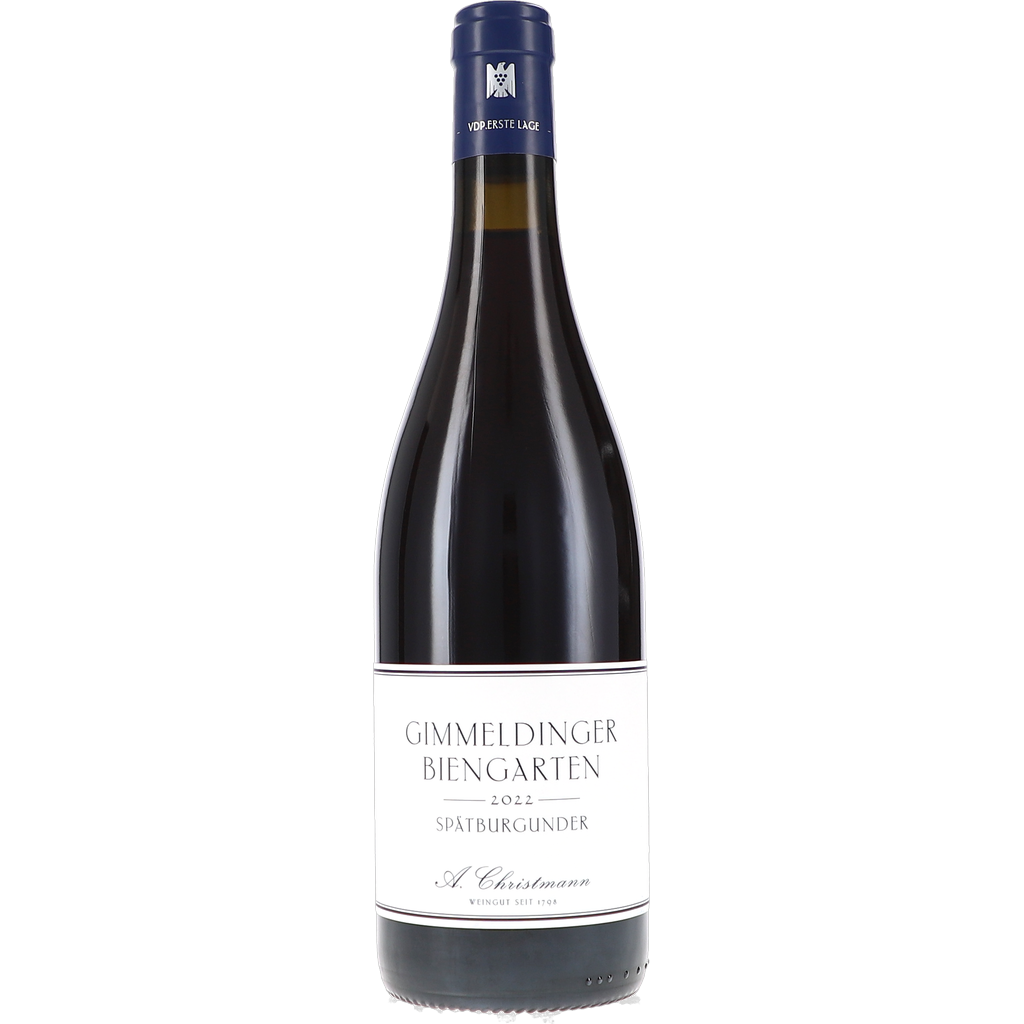
Gimmeldinger Biengarten Spätburgunder VDP Erste Lage 2022
A dry, elegant Pinot Noir from the Palatinate – powerful yet finely balanced, entirely in keeping with the “Prima Ballerina” ideal of Steffen and Sophie Christmann.
Bottler: Winery A. Christmann, Peter-Koch-Str. 43, 67435 Gimmeldingen/Pfalz / Germany
In the glass
Colour
Luminous ruby red with cherry-red reflections at the rim of the glass.
Nose
Ripe red cherry and raspberry, accompanied by dark berries, a hint of violet as well as fine spicy notes of forest floor and a touch of roasted aromas.
Palate
Juicy red fruit meets silky, fine-grained tannins and lively acidity; cool minerality, precise and with a long, elegant finish.
Character
Powerful but never heavy – a finely structured, vibrant Spätburgunder with depth and a clear vineyard signature.
Pairing
An ideal companion to duck breast with cherries, mushroom risotto or mild hard cheese.
Notes
Sourced from the VDP Erste Lage Biengarten in Gimmeldingen, where coloured sandstone and limestone shape the Pinot; the estate has been working biodynamically since 2003 and is certified by respekt-BIODYN as well as EU organic.
Tasting note
Character
A Spätburgunder of cool precision: red cherry, dark berries and a fine, earthy undertone, along with the silky texture for which Steffen Christmann’s Pinots are renowned. The house style follows the ideal of the prima ballerina – powerful yet elegant, with perfect balance rather than an opulent entrance. Vinified dry, with a moderate 13 per cent alcohol, this wine seems drawn rather than painted.
Terroir & Origin
The Biengarten is situated in Gimmeldingen, the best-known district of Neustadt an der Weinstraße, on the Haardt edge of the Palatinate. As a VDP Erste Lage, it belongs to the estate’s classified top repertoire – since downsizing in 2021, Christmann cultivates just 17 hectares, all of them Erste or Große Lagen. The soils of the Haardt slopes, comprising Buntsandstein sandstone, limestone and terrace gravel, shape each vineyard site differently and lend the Pinot depth rather than breadth.
Grape Variety & Vinification
Spätburgunder – Germany’s most demanding red grape, which occupies around 30 per cent of the area here; the rest belongs to Riesling. The estate has worked biodynamically since 2003, certified through respekt-BIODYN and EU organic (expressly not Demeter): horn manure, horn silica and compost preparations replace synthetic chemistry, and all vineyard work follows the lunar calendar. “The roots reach deeper,” says Steffen Christmann – and you can taste this conviction in the tension of his wines. He, VDP President and seventh-generation winemaker, runs the estate together with his daughter Sophie, who brings fresh ideas after studying in Geisenheim and working stints in Bordeaux and Australia.
Food Pairings
The refined fruit and taut drive make it a versatile everyday wine: duck breast with cherry jus, rack of lamb with thyme or mushroom risotto find an equal partner in it. With mature hard cheese or a simple coq au vin too, it shows why Palatinate Spätburgunder has long been more than a discovery for initiates – a wine that does not need to be loud to linger in the memory.