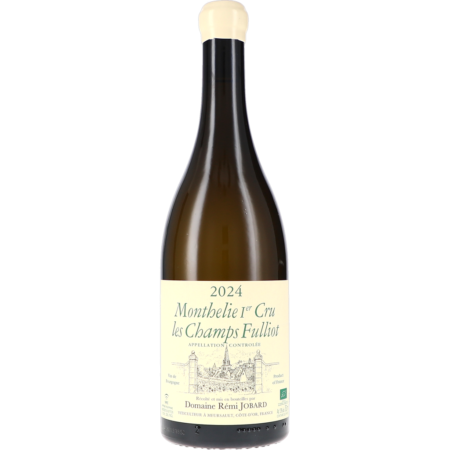
Bourgogne Côte d'Or Vieilles Vignes AOC 2023 1500ml Magnum
Bourgogne Côte d'Or Vieilles Vignes 2023 by Rémi Jobard: crystal-clear Chardonnay from Meursault, aged in 600-litre Stockinger casks – cool fruit, fine minerality, Magnum format.
Bottler: Domaine Rémi Jobard, 12 rue Sudot, 21190 Meursault / France
In the glass
Colour
Pale, brilliant straw yellow with greenish reflections.
Nose
Pure, cool fruit – citrus, green apple, white blossoms – accompanied by delicate stony notes and a hint of hazelnut; free from intrusive toasted oak.
Palate
Taut and juicy, with pronounced minerality, vibrant acidity and a creamy texture; the large cask volume allows the terroir to speak rather than the wood.
Character
Crystalline and transparent – a white Burgundy of striking purity that gains with a little air and time; top quality expressed quietly rather than loudly.
Pairing
Pan-fried sole with lemon butter, poultry in a delicate cream sauce, mature Comté.
Notes
Vieilles Vignes from organically farmed vines (Ecocert-certified since the 1990s); extremely gentle, multi-hour pressing and around 15 months’ ageing in large Stockinger casks; bottled unfiltered; the Magnum bottle promises particularly slow, elegant maturation.
Tasting note
Character
A Chardonnay of crystalline clarity and cool fruit, revealing its origins with complete transparency. The magnum bottle promises a particularly slow, harmonious evolution. This is no wine for the impatient – it needs air and attention to reveal its full depth.
Terroir & Origin
The vines are rooted in the vineyards surrounding Meursault, one of the great white wine villages of the Côte de Beaune. Rémi Jobard has farmed his nine hectares organically since the 1990s – Ecocert-certified, without herbicides, with grassed rows and manual labour. Cordon pruning naturally limits yields, whilst old vines yield grapes of exceptional concentration.
Grape Variety & Vinification
Chardonnay, pressed over six to twelve hours – a gentle pace that has become rare in modern Burgundy. Only the finest must enters the cellar, free from bitter compounds. Maturation takes place in 600-litre Stockinger foudres rather than small barriques: less wood contact, slower oxygen exchange, and some fifteen months of rest. The result is a wine that speaks of its terroir rather than the cask – unfiltered, stabilised by two winters of ageing.
Food Pairings
Alongside sole meunière, coq au vin blanc or a young Comté, this wine reveals its full stature. It also finds an equal partner in porcini risotto or simply pan-fried pike-perch. The magnum format makes it the ideal wine for a long evening à deux – or for patient cellaring.